Announcement

Collapse
No announcement yet.

Helice Normale

Collapse
X
 
  • Filter
  • Time
  • Show
Clear All
new posts

  • pmdec
    replied
    Hi,
    Originally posted by drrivah View Post
    Hi Folks:

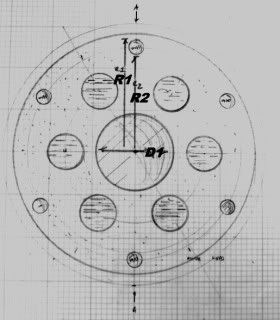
    Here is a rough draft of an Anzani W (~25-30 hp) hub plate superimposed on a wooden hub. .../... .
    All credible historical pictures of THE Blériot XI (the one which crossed the Channel first) show an 8 bolts Chauvière prop fitted to a semi radial 3 cylinders Anzani engine.

    PM

    Remark : This engine is not a "W" engine, which is something very different. The French word for this kind of engine is "en éventail" (literaly, hand fan shaped).
    Last edited by pmdec; 01-24-2012, 04:42 PM. Reason: less confusing text

    Leave a comment:


  • MWP_Lamar
    replied
    Originally posted by Bob Gardner View Post
    Thank you Dave and Lamar for setting it up.
    Thank you for your kind words Bob but I deserve zero credit. Dave's "the man".

    Lamar

    Leave a comment:


  • drrivah
    replied
    Anzani W hub dimensions

    Hi Folks:

    Here is a rough draft of an Anzani W (~25-30 hp) hub plate superimposed on a wooden hub. Been interested in props and relative performance for a replica Anzani engine (1:1).

    Bleriot reports after flying the English Channel his Anzani W ran at 1200 rpm, although others report 1200-1600 rpm for this engine. A/C performs well with
    a C65 engine as well with scaled down prop.

    Can't quite discern the prop type mounted on the original Bleriot XI/Anzani W in Paris. However, from this forum, sounds like Ebora, Chauviere (IPC) and Ratmanoff Helice Normale were used on Bleriot XI at varous dates.

    The cover photo newpaper report on the Channel crossing from the English newspaper "Daily Graphic" July 26, 1909, looks most like a Chauviere. The original flew only once with prop broken on landing in England.

    Would greatly appreciate measurements on Ebora, Chauviere and Ratmanoff hubs in millimeters for the following (see diagram):

    D1=diameter of shaft opening; R1=outer radius from dead center to outermost rim of bolt hole (maybe easier to measure rim of central to outer rim of bolt hole); and R2=inner radius of bolt hole ( dead center to rim or rim to rim if easier, in mm).

    Finally, outer and inner diameter between bolt holes.

    More later on prop diameters and pitch, and substitute engines for the Bleriot XI.

    Thanks, all.

    -pete

    Leave a comment:


  • Bob Gardner
    replied
    I have only just read this thread; and I have read it from beginning to end with mounting admiration. It is a perfect example of how successful this website is. Thank you Dave and Lamar for setting it up.

    Bob

    Leave a comment:


  • Dave
    replied
    It's just not stamped on this particular propeller. I believe it can be calculated based on the angle of the blade at various distances from the hub, but I'm not sure the technique for doing it, and I think it's a trigonometric function.

    Leave a comment:


  • drrivah
    replied
    Prop

    I believe "PAS" is the French for pitch (of a screw). Should be about half the diameter.

    Thanks.

    -pete

    Leave a comment:


  • Dave
    replied
    Originally posted by drrivah View Post
    Can you show a photo or describe the prop hub dimensions?

    For example: dia main bore/front to back thickness of hub/dia of bolt circle.

    Any idea what the propeller pitch is, or the type of wood?

    Thanks.

    -pete
    I'll try to get measurements later today. I don't know what type of wood it is. Perhaps walnut (based on the appearance of the grain, primarily) with a more amber shellac but I can't be sure. The pitch is not stamped on it.

    Leave a comment:


  • drrivah
    replied
    Anzani Helice Normale

    Can you show a photo or describe the prop hub dimensions?

    For example: dia main bore/front to back thickness of hub/dia of bolt circle.

    Any idea what the propeller pitch is, or the type of wood?

    Thanks.

    -pete

    Leave a comment:


  • Dave
    replied
    Here is the preliminary revision for the page showing the Normale propeller. Any suggestions for improvement or clarification is welcome . . .

    Leave a comment:


  • pmdec
    replied
    Hi Dave,
    Originally posted by Dave View Post
    This is a good example of how altering the light source can sometimes be used to better determine the stampings.
    .../...
    Also of some interest is the still partially visible notation at the base of the decal, which I presume to have read "marque déposée"..../...
    Yes, different light sources and different view angles is often the only way to read the markings.
    About "Marque déposée", you are right: it is exactly what is on commercial Ratmanoff papers.
    Also, at the blades feet, you may have a stamp, on the intrados side.

    Sure you may use the data I posted. I sent you a PM.

    Regards,
    PM
    Last edited by pmdec; 04-17-2019, 10:25 AM.

    Leave a comment:


  • Dave
    replied
    This is a good example of how altering the light source can sometimes be used to better determine the stampings. Here's another photo taken with a flash. It shows the "8" fairly clearly and also makes the "3" more plausible, but the first "2" is barely visible. In the end, I feel comfortable that the composite of "B- 278" and "843" are accurate, however.


    Thanks for you input on this, Pierre-Michel. It's much appreciated. I had always assumed that the propeller was designed for use on the Bleriot XI, but lacked much in the way of documentation of that assessment. I'll finish up the new web page and post here when it's done. Do you mind if I include your research information on that page?


    P.S.

    Also of some interest is the still partially visible notation at the base of the decal, which I presume to have read "marque déposée". I haven't seen that on the other decals, although I presume it was there but possibly worn off over time.
    Attached Files

    Leave a comment:


  • pmdec
    replied
    Hi Dave,

    I think we agree about the lenght of 210mm (82.6769", or 6' 10 11/16")!

    I agree also about B 278, but I can't read the "8" before 43...

    I think the serial is "B" and "278" is something else, with ?43 a prop number.

    Ratmanoff Normale serial B is present in two documents I have copies of:

    - a price list dated October 1910, were B props are for Blériot XI fitted with a 3 cylinders Anzani 25HP, "advance for one turn" 0m76, speed 60km/h (so 1315rpm without slipping). Price 350F.
    - a price list dated 1st January 1914, were B props are for Anzani 30HP at 1250rpm, with a length of 210mm and a speed of 70km/h. The prop has a nickname: "moineau" (sparrow). All props listed in this document have a bird nickname. Price 250F (lower than 1910 price).

    So, this prop has been made for a relatively long time, but doesn't appear in WW1 props lists I have (one from French Military Authorities, dated end of 1917, supposed to be complete, nor in American AEF list dated 1918.).

    I think this prop is a very good piece of history, one of the best I know.

    Regards,
    PM
    Last edited by pmdec; 11-29-2011, 02:25 PM. Reason: 2 corrections

    Leave a comment:


  • Dave
    replied
    PM, I stand corrected on several of my original specs, including those on the web page for this propeller. First, I measured it in inches and found 82 11/16" (7', 10 11/16"), which does equal 210 cms. in the calculator that I used. It's extremely close to the length you mention for the "B" series, and may be exactly the same if I measure it directly in millimeters. (Wood may also shrink very slightly even along its length over the 100 years since its manufacture.)


    Secondly, I now think that the serial number is "B 278" followed by either "843" or "842", although I think that the last digit is more likely "3". The "B" and the "2" look well preserved by the varnish, and ironically are then more difficult to see. All of the other numbers have shed some varnish at the indentation and are actually a little easier to visualize because of the contrast.

    I will get the entire page revised shortly, including another decal near the hub, but in the meantime, here is a close-up of the stampings. You can see how faintly the "2" appears, but once seen, it's quite "convincing".

    Attached Files
    Last edited by Dave; 11-29-2011, 12:08 PM.

    Leave a comment:


  • Dave
    replied
    Originally posted by pmdec View Post
    Hi Dave,
    Markings at the blade foot is another particularity for Normale props...

    I think the "78" is coincidental

    Data about pre-WW1 French props are very scarce. On those I have about Ratmanoff, serial B is only 2m10 (6' 10 1/4). Are you sure of the "B"?

    "843" is probably the prop number, which made it a very old one. I know a Ratmanoff envoice from September 1912 showing repair of 13 props. The prop numbers are between 1006 and 1972. As company was founded in 1909, the number 843 may be from 1911 or late 1910 (IMHO!).

    Some times ago, I believed the number after the serial letter(s) was the prop number in this serial. It is false because it existed, for example, two serial KBF-6. Perhaps a batch number, as those two KBF-6 have two numbers in sequence.

    Can you also re-measure your prop very precisely?

    Regards,
    PM
    I'll try to take it down from the wall, photograph it in detail, re-measure it and put it on an updated web page on my web site. Hopefully I can do that tormorrow.

    I have to say, this particular prop has always been one of my favorites, even though it's perhaps not as "glamorous" as some of the others. I was excited to find stampings on it just tonight.

    Leave a comment:


  • pmdec
    replied
    Hi Dave,
    Originally posted by Dave View Post
    I just now found numbers on it that I hadn't seen before, stamped just adjacent to the hub impression. .../...
    Dave
    Markings at the blade foot is another particularity for Normale props...

    I think the "78" is coincidental

    Data about pre-WW1 French props are very scarce. On those I have about Ratmanoff, serial B is only 2m10 (6' 10 1/4). Are you sure of the "B"?

    "843" is probably the prop number, which made it a very old one. I know a Ratmanoff envoice from September 1912 showing repair of 13 props. The prop numbers are between 1006 and 1972. As company was founded in 1909, the number 843 may be from 1911 or late 1910 (IMHO!).

    Some times ago, I believed the number after the serial letter(s) was the prop number in this serial. It is false because it existed, for example, two serial KBF-6. Perhaps a batch number, as those two KBF-6 have two numbers in sequence.

    Can you also re-measure your prop very precisely?

    Regards,
    PM

    Leave a comment:

Working...
X